Recycling and Sustainability for Landscaping Pinner
 At Landscaping Pinner, sustainability is built into every stage of our work, from the first site clearance to the final tidy-up. We believe that attractive outdoor spaces should also support a cleaner local environment, which is why our landscaping in Pinner focuses on reducing waste, reusing materials where possible, and choosing lower-impact transport and disposal methods. Our aim is simple: deliver high-quality results while helping to keep the local area greener, cleaner, and more efficient.
One of our main commitments is to reach a minimum recycling rate of 90% on suitable landscaping waste. That means soil, green cuttings, branches, turf, stone, and inert materials are separated carefully so they can be recovered through the right channels. We work with a strong sorting process on every project, making sure that reusable materials are diverted away from landfill whenever practical. For landscaping Pinner projects, this approach helps us support circular resource use and lower the carbon cost of routine garden improvement.
To make this possible, we use local transfer stations and waste facilities that are set up to manage mixed green waste, aggregates, timber, and other construction-related offcuts. Using nearby transfer stations reduces transport distances and supports faster sorting. It also allows us to stay aligned with borough-level waste separation expectations, where residents and contractors are encouraged to keep garden waste, recyclables, and general rubbish in clearly separated streams. In areas around Pinner, this practical separation culture helps make landscaping waste management more efficient and more environmentally responsible.
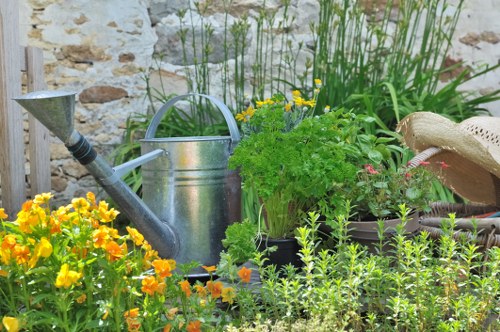 We also pay close attention to the different recycling routes available for the materials produced by landscaping services in Pinner. Organic matter such as hedge trimmings, leaves, and grass can often be processed into compost or soil improver, while clean timber may be recovered for other uses. Rubble, paving fragments, and broken stone can sometimes be crushed and repurposed as aggregate. Where suitable, topsoil can be screened and reused on another project rather than discarded. This careful sorting helps us make the most of the resources already present on site.
Our recycling work also reflects the character of local waste systems across the boroughs surrounding Pinner. In many places, there is a growing emphasis on separating food waste, dry recycling, garden waste, and residual rubbish as early as possible. That same principle applies to landscaping operations. By keeping green waste distinct from mixed debris, we improve the chances of high-value recovery. We also reduce contamination, which is especially important when dealing with compostable material or materials destined for reuse in future landscaping projects.
Partnerships with charities are another important part of our sustainability approach. When usable items are removed from gardens or outdoor areas, we look for opportunities to pass them on to local good causes rather than sending them straight to disposal. Depending on the project, this may include plant pots, decorative planters, outdoor furniture, tools, timber offcuts, or materials that can be rehomed through community groups. These charity partnerships help extend the life of useful items and support organisations that benefit from donated resources.
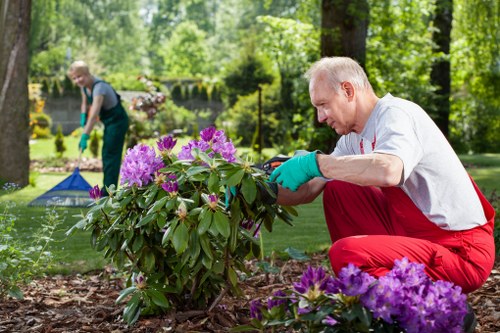 As part of our eco-friendly landscaping Pinner approach, we also plan jobs so that transport is as efficient as possible. Our fleet includes low-carbon vans chosen to reduce emissions on local journeys. These vehicles help us lower the impact of regular site visits, waste runs, and material collection. By combining route planning with fuel-efficient driving practices, we can cut unnecessary mileage while still maintaining a reliable service for domestic and commercial clients across the area.
Low-carbon transport matters because landscaping often involves multiple trips for tools, mulch, turf, soil, and green waste. A more efficient van fleet supports a lower overall carbon footprint, especially when paired with local sourcing and careful load management. We also try to schedule collections and deliveries in a way that avoids wasted journeys. For customers looking for responsible Pinner landscaping, this is one of the clearest ways we can improve sustainability without reducing quality or convenience.
We are equally committed to reducing waste at the source. Before removing material from a site, we look at whether it can be retained, reconditioned, or incorporated into the new design. Old paving may be relaid in another part of the garden, intact sleepers can sometimes be reused, and suitable soil can be redistributed to improve levels. This “use what is already there” mindset is central to modern landscaping in Pinner, especially where homeowners want practical results with a lighter environmental footprint.
 In addition to recycling and transport improvements, we encourage a thoughtful approach to purchasing materials. Choosing durable products, native planting, and responsibly sourced timber helps reduce future waste and maintenance demands. For example, planting schemes that suit local conditions may need less watering and fewer replacements over time. That means less packaging, fewer transport movements, and fewer discarded plants. In this way, sustainable Landscaping Pinner work is not only about what gets recycled, but also about what never becomes waste in the first place.
Where possible, we support suppliers and facilities that share the same environmental priorities. This includes choosing compost products from recovered green waste, aggregates with recycled content, and materials that are designed for long service life. It also means paying attention to the full lifecycle of the job, from site preparation through to post-completion tidying. Our goal is to make each project more circular, more efficient, and better aligned with the environmental expectations of the local community.
For households and businesses seeking responsible landscape services in Pinner, recycling is an essential part of the service, not an optional extra. Whether we are clearing a large garden, refreshing a frontage, or managing a full redesign, we use practical methods to sort waste, recover materials, and reduce emissions. By combining transfer station use, charitable reuse, low-carbon vans, and a strong recycling target, we create outdoor spaces that look good and do good.
 Sustainability in landscaping Pinner is about consistency, attention to detail, and responsible decisions at every stage. From borough-style waste separation practices to recycling green waste, from charity partnerships to lower-emission vehicles, every part of the process supports a cleaner outcome. We believe that good landscaping should improve the land, respect local resources, and leave as little waste behind as possible. That is the standard we aim to deliver on every project.